Introduction
Tungsten heavy alloy and pure tungsten are both high-density materials, but they differ in composition, mechanical properties, and processing characteristics. Pure tungsten offers a very high melting point and high material purity, while tungsten heavy alloys combine high tungsten content with a metallic binder phase to provide different levels of strength, ductility, and machinability. Understanding these differences helps engineers select the right material for specific industrial components.
Tungsten Heavy Alloy vs. Pure Tungsten: Material Comparison
|
Property |
Pure Tungsten |
Tungsten Heavy Alloy |
|---|---|---|
|
Material Composition |
At least 99.95% tungsten |
Typically 90–97 wt.% tungsten with a metallic binder phase |
|
Density |
Approximately 19.25 g/cm³ |
Approximately 16.5–18.75 g/cm³, depending on tungsten content |
|
Melting Point |
Approximately 3420°C |
No single melting point; depends on alloy composition |
|
Mechanical Behavior |
High strength under suitable conditions, but relatively low room-temperature ductility |
Generally offers greater ductility and toughness than pure tungsten |
|
Machinability |
Difficult to machine due to its hardness and brittleness |
Generally easier to machine, depending on grade and processing condition |
|
High-Temperature Performance |
Excellent high-temperature capability |
Depends on binder phase, composition, and operating conditions |
Tungsten Heavy Alloy Composition And Material Structure
Pure tungsten has a body-centered cubic (BCC) crystal structure. Its properties are primarily determined by its high tungsten purity.
Tungsten heavy alloys are produced through powder metallurgy. Tungsten powder is combined with a metallic binder and consolidated through liquid-phase sintering, forming a tungsten-rich phase and a binder phase.
Two common alloy systems are tungsten-nickel-iron (W-Ni-Fe) and tungsten-nickel-copper (W-Ni-Cu). Their binder compositions influence mechanical, electrical, and magnetic characteristics. See our W-Ni-Fe vs. W-Ni-Cu tungsten alloy comparison for more details.
Is Tungsten Heavy? Understanding Its Density And Weight
Pure tungsten has a density of approximately 19.25 g/cm³, while tungsten heavy alloys typically range from 16.5 to 18.75 g/cm³, depending on tungsten content and alloy composition.
For components with fixed dimensions, density directly affects the final weight. The actual part weight also depends on its geometry and dimensions.
Material Selection For Different Components
Pure Tungsten
Commonly used for furnace parts, heating elements, and thermal processing equipment where high-temperature resistance or high material purity is required.
Tungsten Heavy Alloy
Used for counterweights, balancing components, radiation shielding parts, and precision industrial components requiring high density and mechanical strength.
Temperature Performance And Grade Selection
Pure tungsten has a melting point of approximately 3420°C. However, its melting point should not be treated as a recommended operating temperature. Actual service performance depends on the operating atmosphere, applied loads, and component design.
Tungsten heavy alloys have different temperature limitations because they contain a metallic binder. Their elevated-temperature performance depends on the binder system, alloy composition, and service conditions.
Common tungsten content grades include:
- 90% tungsten
- 93% tungsten
- 95% tungsten
- 97% tungsten
Higher tungsten content generally increases alloy density. The actual density and mechanical properties also depend on the binder composition and manufacturing process. Grade availability should be confirmed against the manufacturer's specifications.
Tungsten Heavy Alloy Products And Custom Machining
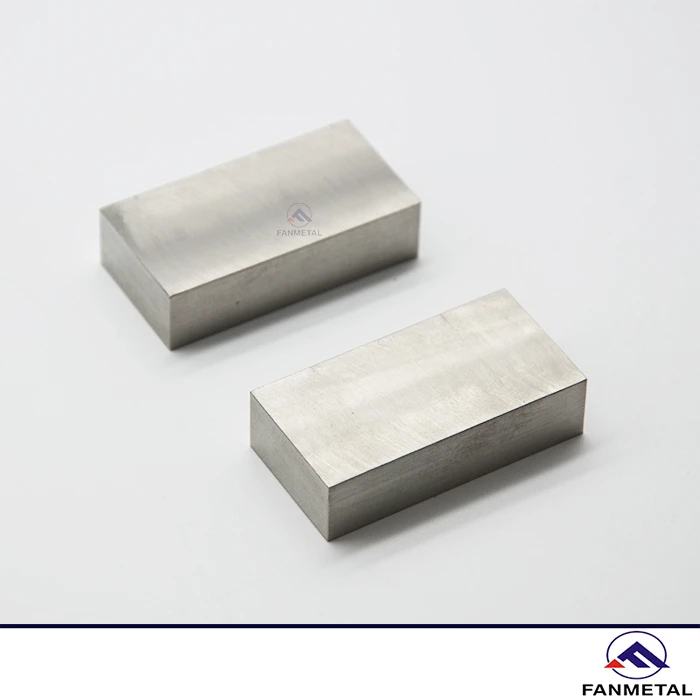
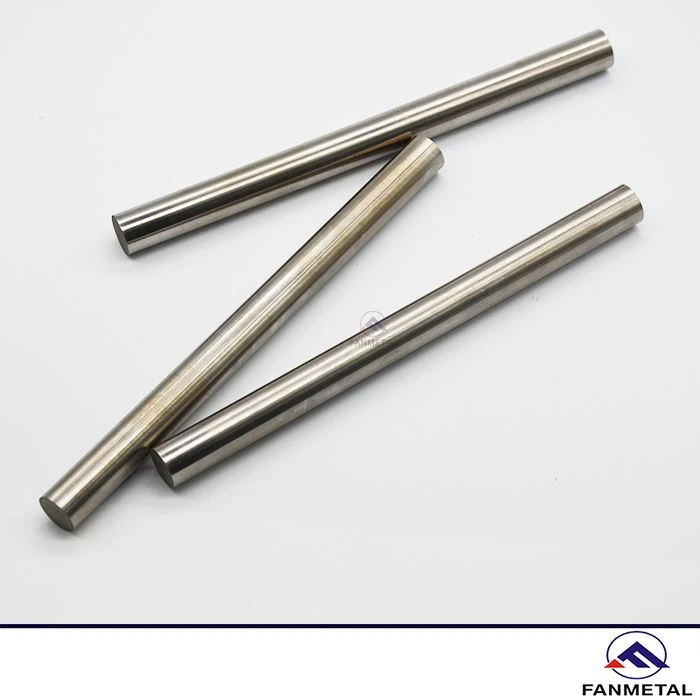
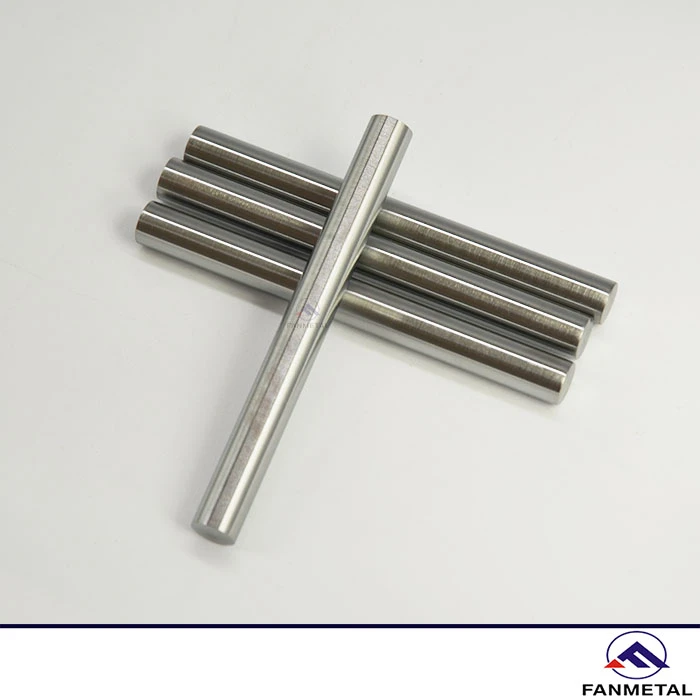
Tungsten heavy alloys are available in various forms, including rods, plates, sheets, and blocks. FANMETAL also supplies custom-machined components such as rings, bolts, counterweights, and other precision parts based on customer drawings.
For a quotation, please provide the alloy system (W-Ni-Fe or W-Ni-Cu), required tungsten content or density, dimensions, quantity, and tolerances. Drawings and specific mechanical, electrical, magnetic, or operating-temperature requirements can also help determine the appropriate material and machining specifications.
Our Tungsten Heavy Alloy Products