

In the modern industrial field, cemented carbide has become the core material for mechanical processing, mining, oil drilling, and other industries due to its high hardness, wear resistance, and red hardness. However, in practical applications, cemented carbide tools and parts often fail prematurely due to wear, chipping, and thermal cracking, which not only increases production costs but also affects production efficiency and product quality.
1. Wear failure mechanism
(I) Causes
The wear of cemented carbide mainly includes abrasive wear, adhesive wear, and corrosive wear. Abrasive wear is the most common form. When the cemented carbide and the workpiece surface move relative to each other, the hard points on the workpiece surface or the chips generated during the processing are like tiny abrasive particles, scratching grooves on the cemented carbide surface, causing material loss. Adhesive wear occurs under high temperatures and high pressure. The atoms on the cemented carbide and the workpiece surface diffuse with each other, resulting in local adhesion. During relative movement, the bonding points are torn, and the cemented carbide material is taken away. Corrosive wear refers to the chemical reaction on the surface of cemented carbide under the action of chemically active media to form corrosion products. These products fall off during friction and accelerate the wear of the material.
(II) Solutions
① Surface coating technology: A layer of high-hardness, low-friction coating, such as titanium nitride (TiN) and titanium carbide (TiC), is applied to the surface of cemented carbide by chemical vapor deposition (CVD), physical vapor deposition (PVD) and other methods. These coatings can effectively isolate cemented carbide from the workpiece, reduce the occurrence of abrasive wear and adhesive wear, and at the same time improve the oxidation resistance of Tungsten Carbide Inserts and reduce the risk of corrosion wear.
② Optimize processing parameters: Reasonable adjustment of processing parameters such as cutting speed, feed rate, and cutting depth can significantly reduce the degree of wear of cemented carbide.
③ Choose the right lubricant: Using high-performance lubricants, such as cutting fluids containing extreme pressure additives, can form a lubricating film between cemented carbide and the workpiece to reduce friction and wear. Lubricants can also play a role in cooling and cleaning, taking away cutting heat and chips in time, and further reducing wear.


2. Blade chipping failure mechanism
(I) Causes
Breakage refers to the sudden peeling of small or large pieces of material on the cutting edge of cemented carbide during the cutting process. The main reasons include the uneven structure of cemented carbide itself and the presence of defects such as pores and cracks. In addition, frequent intermittent cutting and impact loads can also easily lead to the chipping of cemented carbide.
(II) Solutions
① Improve the quality of cemented carbide: strictly control the production process, ensure the uniform structure of the material, reduce internal defects, and strictly test the key indicators of the material, such as density, hardness, and bending strength.
② Optimize tool design: According to the specific processing technology and workpiece material, reasonably design the geometric parameters of the tool. For example, reduce the edge angle and increase the edge strength. At the same time, reasonably design the tool body structure, increase the rigidity and strength of the tool body, and avoid chipping due to tool body deformation.
③ Stabilize the processing process: Before processing, fully pre-treat the workpiece. During the processing, adopt a stable cutting method to avoid sudden feeding and retraction. For processing conditions that are prone to impact loads, such as intermittent cutting, a vibration reduction device can be used to reduce the impact of vibration on the tool.


3. Thermal cracking failure mechanism
(I) Causes
Thermal cracking refers to the failure of cemented carbide due to cracks on the surface caused by repeated thermal cycles. Repeated thermal expansion and contraction will generate thermal stress on the tool surface. When the thermal stress exceeds the strength limit of cemented carbide, thermal cracks will occur. In addition, cemented carbide has poor thermal conductivity, and it is difficult for heat to be quickly conducted away, which will also aggravate the generation of thermal cracks.
(II) Solution
Improve cooling method: Use an efficient cooling system to take away cutting heat in time and reduce the surface temperature of the tool. At the same time, choose a suitable cutting fluid to improve its cooling and lubrication properties.
Choose cemented carbide with good heat resistance: For example, cemented carbide with added elements such as tantalum (Ta) and niobium (Nb) has significantly improved high-temperature strength and oxidation resistance, and can better resist thermal cracking.
Optimize processing technology: Use reasonable processing technology to reduce the generation of cutting heat. For example, use segmented cutting, layered cutting, and other methods to avoid long-term continuous cutting of the tool so that the tool can be fully cooled.

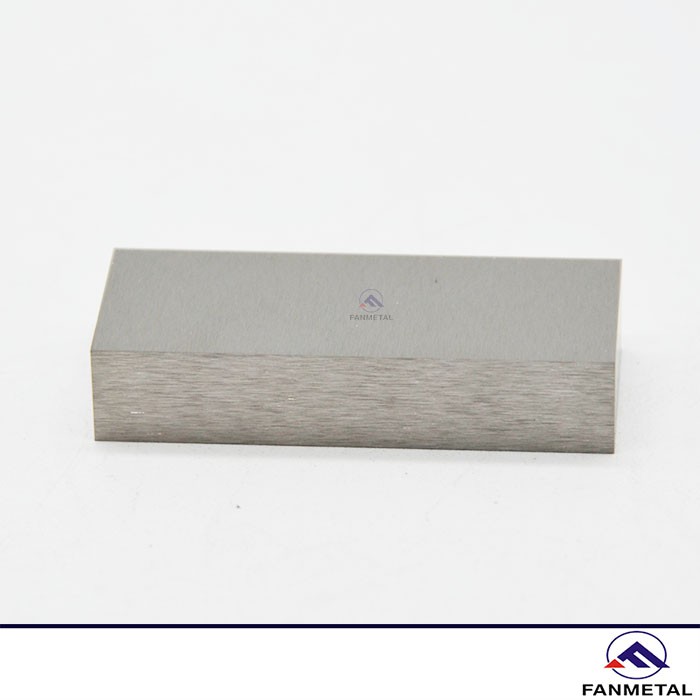
Conclusion
In actual engineering applications, engineers need to use a variety of solutions according to specific processing conditions and requirements to achieve the best effect. FANMETAL has been committed to providing high-quality non-ferrous metal products to overseas customers and has obtained ISO9001 certification, which can provide customers with high-quality customized production and efficient one-stop service. If you have any questions about this product's details or delivery time, don't hesitate to get in touch with us at admin@fanmetalloy.com. We look forward to your message.
