



Titanium Grade 2 Flanges
Overview
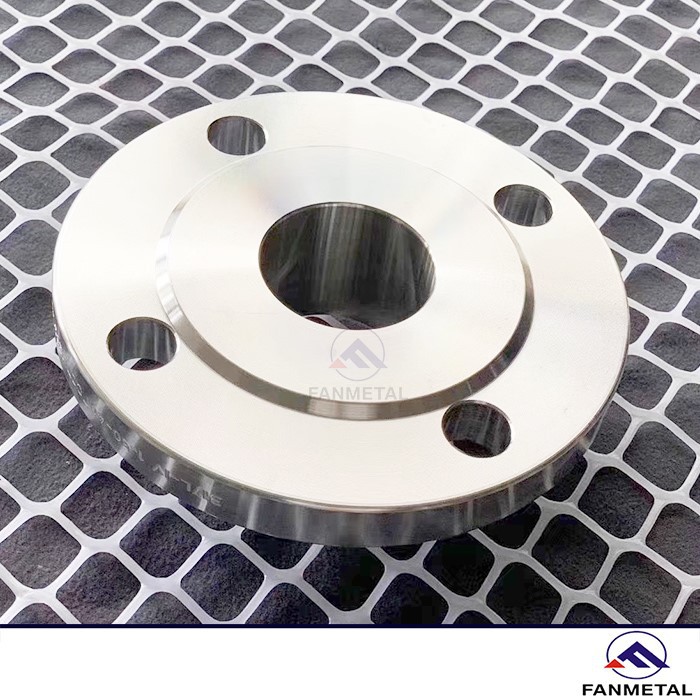
Titanium Grade 2 Flanges are made from titanium with a purity of over 99.2 per cent. They are made using methods like forging, machining, and heat treatment. These titanium flanges are used to connect pipes, valves, and equipment with a seal. The reason Titanium Grade 2 flanges are so popular is that they can resist corrosion well, and they are very light. This makes Grade 2 flanges important in fields like chemical engineering, marine engineering, and energy, where these properties are really needed. Compared to TC4 flanges, Grade 2 flanges offer superior formability and weldability, and are relatively lower in cost, making them one of the most widely used grades of commercially pure titanium.
Grade 2 Features
- Excellent corrosion resistance, exhibiting good resistance tooxidisingg, neutral, and weakly reducing media, making it particularly suitable for environments involving seawater, wet chlorine gas, and chloride solutions.
- Lightweight and high-strength with low density, significantly reducing the overall load on piping systems, especially suitable for weight-sensitive applications.
- Balanced mechanical properties, meeting the pressure requirements of conventional operating conditions, while possessing good toughness to avoid the risk of brittle fracture.
- Extremely wide operating temperature range, maintaining good toughness in cryogenic environments, and also suitable for medium-to-high temperature conditions in the energy and chemical industries.
Titanium Grade 2 Flanges Specification
| Grade | Ti | C | Fe | H | N | O | Al | V |
| Ti Grade2 | 99.2 min | 0.1 max | 0.3 max | 0.015 max | 0.03 max | 0.25 max | – | – |
| Grade | Gr2 |
| Purity | Ti≥99% |
| Nominal Diameter |
DN10-DN600 |
| Diameter of Holes | 0.5-2mm |
| Pressure Rating |
PN10/PN25/PN40/PN100/PN160 |
| Density | 4.51g/cm³ |
| Tensile Strength | ≥344MPa |
| Elongation | ≥20% |
| MOQ | 2PCS |
| Surface | Polishing |
| Delivery Time | 25 DAYS |
| Standard | ASTM/ASME B381
ASME B16.5 |
| Certification | ISO 9001 |
Different Types of Titanium Flanges

Titanium Weld Neck Flange

Titanium Blind Flange

Slip-on Flanges

Socket Weld Flanges
Titanium Grade 2 Flanges Application


- Titanium flanges and fittings show up in a bunch of different industries because they handle tough conditions pretty well. Like in the chemical and petrochemical side, they get used for things such as reactors, heat exchangers, and all that piping in distillation columns. I think the big deal is how they work in pipelines with sulfur or chlorine in the oil and gas, where regular carbon steel or stainless steel just corrodes too fast and fails. It seems like that fixes a lot of problems there.
- In marine stuff and desalination, these parts are good for seawater cooling on ships or offshore platforms. They connect evaporators and handle the high-pressure deep water without rusting much. That resistance to corrosion makes sense for those environments.
- The biopharmaceutical industry uses them in piping for medical devices that need steam sterilisation under pressure. Since titanium is non-magnetic and doesn't contaminate anything, it fits sanitary standards okay. Non-toxic too, which is important.
- Food processing is another area. For lines handling dairy, condiments, or even beer production, the flange connections hold up. They meet food-grade requirements and deal with acids or alkalis during cleaning. I might be oversimplifying, but it seems reliable for that.
- Aerospace takes advantage of titanium for weight savings. In hydraulic systems on aircraft, fuel lines, and cabin air conditioning pipes, the connections help keep things light. That part stands out as practical.
- Cryogenic engineering involves storage tanks and pipelines for liquid natural gas or nitrogen. They manage the extreme cold without issues.
- The energy sector has them in nuclear power plant cooling, like heat exchanger connections, and geothermal equipment, too. It feels like those high-stakes setups need the durability. Although the long-term performance is not entirely clear, the applications cover a wide range.
How To Install Titanium Ti Flange
① Preparation: Check the titanium flange specifications, gasket material (which must match the characteristics of the medium), and bolt integrity. Prepare tools such as a torque wrench, non-woven cloth, and alcohol.
②Gasket Placement: Centre the gasket in the sealing groove of the pipe flange, ensuring the edges do not extend beyond the flange face.
③Flange Alignment: Align the titanium flange with the pipe flange holes. Use a right-angle ruler to confirm that the two flange faces are parallel and perpendicular, avoiding misalignment.
④Bolt Tightening: First, manually tighten the bolts until they are snug. Then, tighten them in a diagonal sequence in multiple passes, avoiding overtightening, which can cause deformation.
⑤Inspection and Testing: Check the bolt tightness and the gap between the flange sealing surfaces. Conduct a leak test to ensure no medium leakage during operation.

Titanium Flanges VS Stainless Steel Flanges
In aircraft, race cars, high-end bicycles, or marine power systems, titanium is the preferred choice for weight reduction.
For general food processing applications with lower budget constraints, stainless steel is a more economical option.
| Material | Ti Flanges | Stainless Steel Flange(304/316) |
| Density | 4.5 g/cm³ | 7.9 g/cm³ |
| Corrosion Resistance |
Extremely resistant (to seawater, chloride ions, acids, and alkalis) |
General (sensitive to chloride ions and strong acids) |
| Strength Performance |
High strength, with an exceptionally high specific strength (strength/density) |
Moderate strength, good plasticity |
| Biological Characteristics |
Non-magnetic, excellent biocompatibility |
304/316 stainless steel is typically non-magnetic, but may exhibit weak magnetism after machining. |
| Working Life |
Extremely durable (suitable for high temperatures, high pressure, low temperatures and other harsh operating conditions) |
Standard (requires periodic replacement in harsh environments) |
| Market Price |
Expensive (3 to 8 times the cost of stainless steel) |
Cost-effective (abundant resources, mature technology) |
Pictures

Packing News

Titanium Grade 2 Flanges, Pure Titanium Flanges To America
Our company recently successfully shipped a batch of Pure Titanium Flanges, conforming to ASTM B381 standards, to Los Angeles, USA, for a client's chemical plant upgrade project. The products are made from high-purity titanium material, possessing excellent high-temperature resistance and corrosion resistance, and have passed rigorous testing to meet ANSI/ASME B16.5 standards. We provide comprehensive foreign trade services and high-quality customised services, ensuring efficient delivery and further strengthening our competitiveness in the international market.

Why Choose Us?
high quality
All products undergo comprehensive quality control throughout the entire process, from raw material procurement and manufacturing to finished product inspection, and hold ISO 9001 quality certification.
customized service
We not only supply standardised products, but our technical team can also undertake bespoke design and custom manufacturing to meet clients' specific requirements.
professional team
Our technical team boasts over ten years of production experience, while our service team possesses more than five years of professional expertise. This enables us to fulfil our clients' requirements.
global shipping
We collaborate with international freight carriers such as DHL, UPS, and SF Express to provide door-to-door delivery services.
Product Qualification

Hot Tags: titanium grade 2 flanges, suppliers, manufacturers, factory, customized, wholesale, price, quotation, for sale, 6Al 4V Titanium Sheet, Gr5 Titanium Sheets, Ti 6Al 4V Titanium Sheet, Ti-6Al-4V Titanium Sheet, Titanium And Alloys, titanium round tube
Send Inquiry
