

Tungsten is widely used in X-ray tubes because it combines a high atomic number, high melting point, good thermal conductivity, and low vapor pressure. These properties allow tungsten to produce X-rays efficiently while withstanding the intense heat generated when high-speed electrons strike the target.
In X-ray tubes, tungsten is commonly used in the anode target and cathode filament. The target converts electron energy into X-rays, while the filament emits electrons when heated.

Why Is Tungsten Used in X-Ray Tubes?
In an X-ray tube, the cathode filament emits electrons when heated. The electrons are accelerated toward the anode target, where their interaction with the target material produces X-rays through Bremsstrahlung and characteristic radiation. Because the target is exposed to intense electron bombardment and heat, the material must maintain its stability under high-temperature and vacuum conditions:
-
High Melting Point:
During X-ray generation, intense heat is produced when high-speed electrons strike the target material. Tungsten has a melting point as high as 3,422°C, so it can withstand extremely high operating temperatures without melting or losing structural stability.
-
High Atomic Number:
The higher the atomic number, the greater the probability of electrons colliding with nuclei, the higher the X-ray yield, and the shorter and stronger the penetration of the generated X-rays, which can meet the needs of different scenarios (such as industrial thick parts inspection, medical CT).
-
Good thermal conductivity:
Electron bombardment generates a large amount of heat on the surface of the target material. Tungsten's thermal conductivity helps dissipate heat from the focal area, thereby reducing thermal stress during operation.
-
Low Vapor Pressure and Vacuum Stability
In high vacuum and strong electric field environments, it needs to have excellent anti-oxidation and sputtering properties and not react with other components in the tube to ensure long-term stable operation of the X-ray tube.
Tungsten Target X-Ray Tube vs Other Materials Used in X-Ray Tubes
At present, the materials that can be tried to be applied to the core components of X-ray tubes are mainly divided into two categories: one is the metal materials used for anode targets and cathode filaments, including copper, molybdenum, rhenium, tantalum, gold, etc. and some alloys; Another category is the material used for X-ray exit windows, with beryllium (beryllium window) being the most commonly used core material-the two work together to support the normal operation of the X-ray tube.
|
Material |
Melting point (°C) |
Atomic number (Z) |
Thermal conductivity (W/(m·K)) |
Typical X-Ray Tube Role |
|
|
Tungsten |
3422 |
74 |
173 |
Anode target, filament
|
High X-ray efficiency and high-temperature resistance |
|
Copper |
1085 |
29 |
401 |
Low-power X-ray tube auxiliary components |
Excellent thermal conductivity, low processing difficulty, and low cost |
|
Molybdenum |
2623 |
42 |
138 |
Anode target in selected applications | Good thermal and mechanical properties |
| Rhenium |
3180 |
75 |
48 |
Alloyed with tungsten, tungsten-rhenium alloy |
High-temperature performance |
| Tantalum |
2996 |
73 |
54 |
|
Excellent thermal conductivity |
| Beryllium (beryllium windows) |
1287 |
4 |
150 |
X-ray window | Low X-ray absorption |
Role of Tungsten Target in X-Ray Tubes

-
Efficient X-Ray Generation:
Undertake the high-speed thermal electrons emitted by the cathode filament, and efficiently generate X-rays through the conjugate radiation (electron deceleration to release energy) and characteristic radiation (electron transition in the inner layer of tungsten atoms), which is the core prerequisite for X-ray tubes to achieve imaging and detection functions. Tungsten X-ray target can provide efficient X-ray generation while maintaining dimensional and thermal stability during repeated electron bombardment.
-
Resistance to High Operating Temperatures:
A large proportion of the electron energy is converted into heat at the target surface. Tungsten's high melting point and thermal stability allow the target to withstand the severe thermal conditions generated during X-ray production. The tungsten target can withstand extremely high temperatures due to its high melting point of 3410 °C, avoiding melting, deformation, or volatilization; this prevents the X-ray tube from stopping due to target damage and supports long-term continuous operation.
-
Contribution to X-Ray Output and Quality:
Tungsten has an atomic number of 74, which can control the wavelength and intensity of X-rays through its own atomic structure; it can not only generate continuous-spectrum X-rays (suitable for detecting objects of different densities and thicknesses), but also emit high-intensity characteristic X-rays (suitable for high-precision detection scenarios), while reducing unnecessary ray losses, taking into account imaging quality and radiation safety.
-
Stability in Vacuum Conditions:
Tungsten targets have stable chemical properties in high-vacuum and strong-electric-field environments and are not easily oxidised or sputtered, which helps prevent target particles from falling off and polluting the tube environment (such as damaging the beryllium window and affecting the vacuum level).

What Type of Tungsten Is Used in X-Ray Tubes?
High-purity tungsten is commonly selected for X-ray tube target applications because its high atomic number, high melting point, and thermal stability support efficient X-ray generation under intense electron bombardment. Tungsten-rhenium alloys may also be used for specific components where improved ductility and high-temperature performance are required.
Tungsten Materials Used in X-Ray Tubes
- In the raw material screening process, we only select virgin tungsten concentrate with a purity of≥ 99.95% and control the impurity content in tungsten below 0.005% through multiple impurity removal processes to avoid impurities affecting the high-temperature resistance and stability of tungsten.
- In process development, we optimised our exclusive processing for X-ray tube components. For anode tungsten targets, we use the "composite target moulding process" to combine tungsten with molybdenum, utilising tungsten's high-temperature resistance and atomic number, and molybdenum's thermal conductivity, to reduce target surface temperature. For cathodic filaments, we improved drawing and annealing processes to enhance their toughness and high-temperature strength, preventing burnout.
- We are equipped with metallographic microscopes, hardness testers, high-temperature performance testers, and other equipment to strictly test tungsten products from multiple dimensions to ensure that the product performance meets the standard. At present, the pass rate of tungsten products for X-ray tubes is 99.98%, which is widely recognised by customers.
- For example, the tungsten-rhenium alloy target we have developed combines the cost performance of tungsten and the high-temperature stability of rhenium, adapting to the needs of high-power and long-life X-ray tubes, and has been applied to special X-ray inspection equipment in the aerospace field.
Summary and Reflection
Tungsten remains one of the most commonly used materials for X-ray tube targets and filaments; its high atomic number, high melting point, excellent thermal properties, and vacuum stability provide a better balance between efficiency and durability.
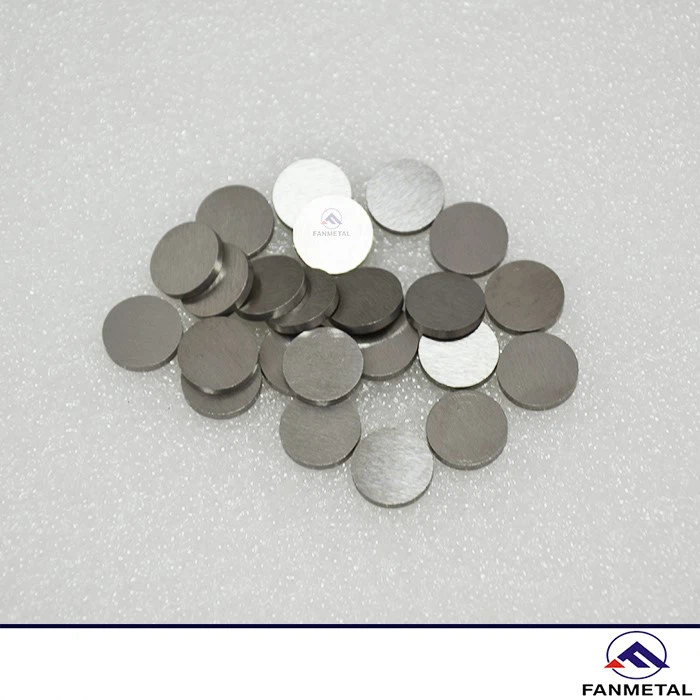
FANMETAL supplies tungsten X-ray targets manufactured from high-purity tungsten for X-ray tube applications. Custom sizes and configurations are available according to application requirements. If you have any questions about this product's details or pricing inquiries, don't hesitate to get in touch with us at admin@fanmetalloy.com. We look forward to your message.
FAQ
Q: Why is tungsten preferred for X-ray tube targets?
A: Because tungsten has a high atomic number, high melting point, and good thermal stability, making it suitable for producing X-rays while withstanding intense heat.
Q: Is tungsten used in both the anode and cathode of an X-ray tube?
A: Tungsten is commonly used in the anode target, while tungsten-based materials are also used for certain cathode filament applications.
Q: What is the atomic number of tungsten?
A: Tungsten has an atomic number of 74, which contributes to its effectiveness as an X-ray target material.
Q: Why is tungsten used instead of copper for X-ray targets?
A: Tungsten has a much higher atomic number and melting point than copper, making it better suited to the intense electron bombardment and heat experienced by an X-ray target.
Q: Can tungsten X-ray targets be customized?
A: Yes. Tungsten X-ray targets can be manufactured in different dimensions and configurations according to the requirements of the X-ray tube assembly
