Introduction
Titanium rods and titanium alloys may generate surface residues and processing waste during manufacturing. Proper treatment methods can help remove contaminants, improve surface quality, and increase the utilization of titanium materials.
Treatment of Titanium Chip Residues
The processing process of chip residue is as follows: residual titanium debris - crushing - cleaning - drying - screening - removal of high-density metal inclusions - inspection - packaging and preservation.
The cuttings can be broken by the herringbone gear roller crusher or the hammer crusher. Cleaning is carried out on the cleaning machine. Using hot air dryers or an electric heating dryer to clean titanium chips. The screening of titanium chips is carried out in a double-hole screen. After screening, the chips are separated by an air separator, and then processed by a high-intensity magnetic separator to remove high-content metal inclusions (alloy cutter head in mixed titanium chips, etc.). The titanium chip material is carried out on the distributing machine, so that the chip material with different composition and geometric size is evenly distributed. After purification treatment, inspection-qualified chip residual material is returned to the charge.
Treatment of Blocky Residual Materials
The processing process is as follows: block residue - brand identification - fixed scale vault cutting/cutting - removal of surface contaminated layer - inspection - packaging and storage. For brand identification, an eddy current conductance instrument, steel inspection mirror, and mobile straight-beam spectrometer can be used to identify bulk residual materials, which can quickly distinguish pure titanium and alloy and determine the elements contained in gold residual materials. Fixed-size cutting is often done by a shearing machine, crocodile scissors, or self-cutting by fire. The surface oxidation layer can be removed by alkali washing or an ultrasonic cleaning machine.
Vacuum consumable arc furnace melting recovery
Generally, electrodes with a certain strength should be prepared first to prevent the appearance of lumps in the smelting process. The chip-type return charge or small-size block return charge is fully mixed with sponge titanium and alloy elements, pressed into electrode blocks on the oil press, and then welded into a consumable electrode, which is the most common method for vacuum consumable arc furnace to recover the return charge, and the proportion of the return charge can reach 40%.
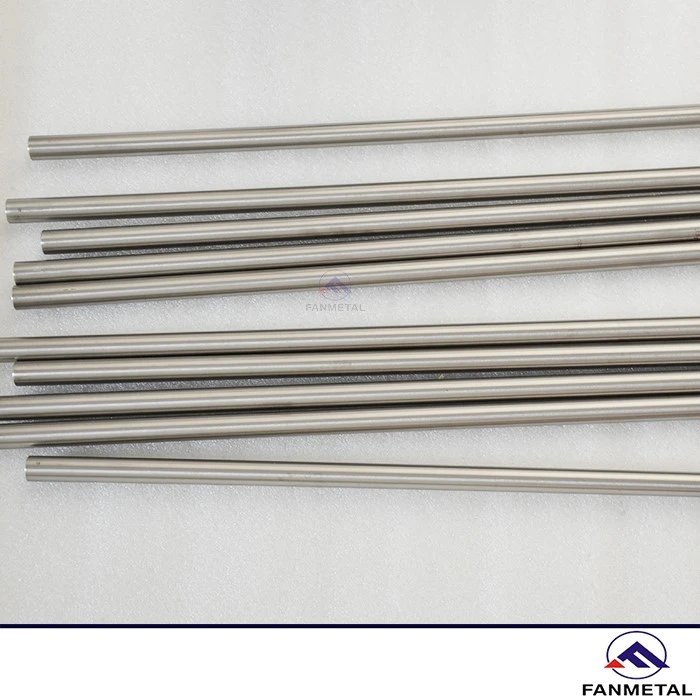
FANMETAL supplies Medical Titanium rod, Gr5 Titanium Bar, titanium alloy coil, and other materials for different applications. Please send us your requirements for more information.