

Noble metals include eight metal elements: gold (Au), silver (Ag), platinum (Pt), palladium (Pd), rhodium (Rh), iridium (Ir), osmium (Os), and ruthenium (Ru).
1. Gold (Au)
Chemical stability: It has extremely high chemical stability. It does not react with common substances such as oxygen and water at room temperature. It is not easily corroded by chemicals such as acids and alkalis. It can only be dissolved in a few strong oxidizing acids such as aqua regia.
Physical properties: It is golden in color, has a metallic luster, is soft, has good ductility and forgeability, is a good conductor of heat and electricity, has a large density of 19.32 g/cm3, and a melting point of 1064.43℃.
2. Platinum (Pt)
Chemical stability: It has extremely stable chemical properties and strong corrosion resistance. It does not react with most chemicals at room temperature. It can resist the erosion of acids and alkalis. It can only be slowly dissolved in aqua regia and molten alkali.
Physical properties: It has a silvery white appearance, a metallic luster, a soft texture, good ductility and forgeability, a density of 21.45 g/cm3, a melting point of up to 1772℃, and high catalytic activity.
3. Palladium (Pd)
Chemical properties: Good chemical stability, resistant to corrosion by organic acids, alkalis and salts, but soluble in nitric acid and aqua regia. Under certain conditions, palladium can react with oxygen, hydrogen, etc., and has good hydrogen absorption properties.
Physical properties: Silvery white in color, metallic luster, soft texture, good ductility, density of 12.02 g/cm3, melting point of 1554.9℃, higher resistivity than platinum, and smaller resistance temperature coefficient.
Catalytic activity: It has excellent catalytic properties and is often used as a catalyst in chemical reactions. It can accelerate the reaction rate and improve the selectivity and conversion rate of the reaction.
4. Rhodium (Rh)
Chemical stability: It has high chemical stability and oxidation resistance. Under normal circumstances, it does not react with most chemicals and can resist the erosion of oxygen, acid, etc. at high temperatures.
Physical properties: Silvery white, metallic luster, hard and brittle, with high reflectivity and low resistance, density of 12.41 g/cm3, melting point of 1966℃, one of the most corrosion-resistant metals.
Catalytic performance: It is a very effective catalyst, especially in the fields of automobile exhaust purification, petrochemicals, etc., which can convert harmful gases such as carbon monoxide and nitrogen oxides into harmless carbon dioxide and nitrogen.
5. Iridium (Ir)
Chemical stability: It is extremely chemically stable and one of the most corrosion-resistant metals. It does not react with ordinary acids and alkalis, and is almost insoluble even in aqua regia. It can only react with some strong oxidants at high temperatures.
Physical properties: It is silvery white, shiny, hard and brittle, with a density of 22.56 g/cm3, the second densest metal, with a melting point of 2446℃, and has high hardness, high melting point and good wear resistance.
High temperature stability: It can still maintain good physical and chemical properties under high temperature environment, so it is often used to manufacture high temperature equipment and components, such as combustion chambers and spark plugs of aircraft engines.
6. Silver (Ag)
Physical properties: It has a white and bright metallic luster. It has the best electrical and thermal conductivity among all metals. It also has good ductility and flexibility. Its density is 10.5 g/cm3, and its melting point is 961.93℃.
Photosensitivity: It has good photosensitivity. Silver halides (such as silver chloride, silver bromide, etc.) will decompose under light. This property makes it widely used in traditional photography technology.
7. Osmium (Os)
Chemical properties: The chemical properties are relatively stable, but it can react with oxygen, halogens, etc. under certain conditions. Its oxide has strong oxidizing properties.
Physical properties: It is blue-gray and has a metallic luster. It is the metal with the highest density. Its density is 22.61 g/cm3 and its melting point is 3033℃. It is hard and brittle, with high hardness and good wear resistance.
Volatilization: Osmium tetraoxide (OsO₄) is volatile and highly toxic, which limits its application to a certain extent.
8. Ruthenium (Ru)
Chemical stability: It has stable chemical properties, does not react with most chemicals at room temperature, and can resist acid and alkali corrosion, but can react with oxygen, halogens, etc. at high temperatures.
Physical properties: It is silver-gray, has a metallic luster, is hard in texture, has a density of 12.45 g/cm3, has a melting point of 2334°C, and has good electrical and thermal conductivity.
Catalytic performance: It has good catalytic performance and can be used as a catalyst in some chemical reactions. It can improve the efficiency and selectivity of the reaction and is often used in petrochemical, electronics and other fields.

Palladium Alloy Foil Sheet

Rhodium Rod
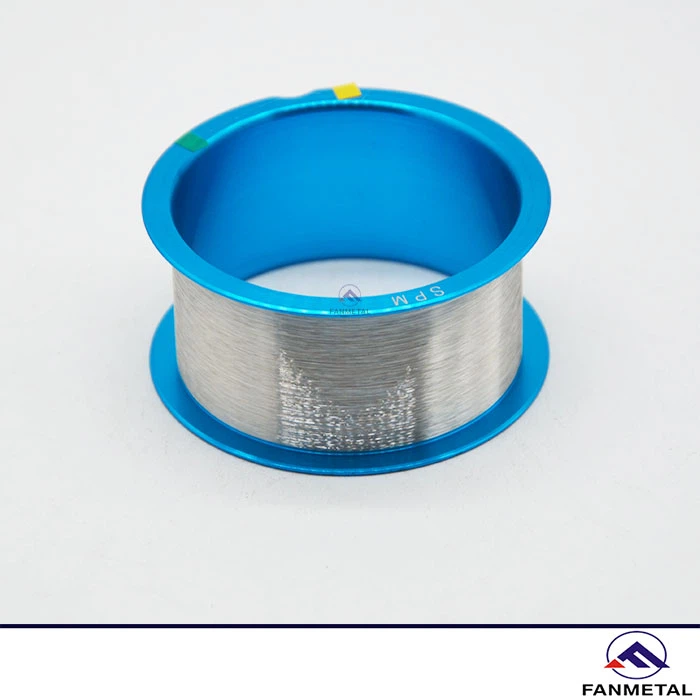
Platinum Wire

Platinum Iridium Medical Wire

Gold-plated Tungsten Wire

Iridium Strip