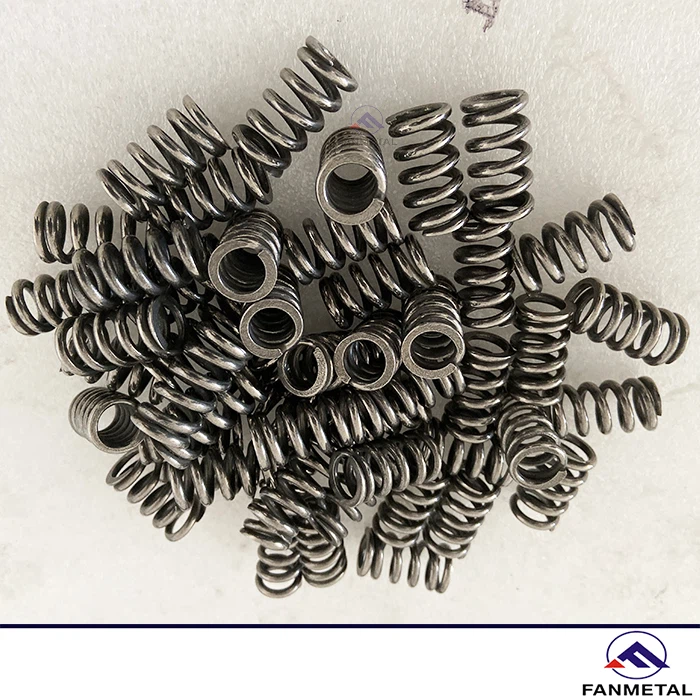
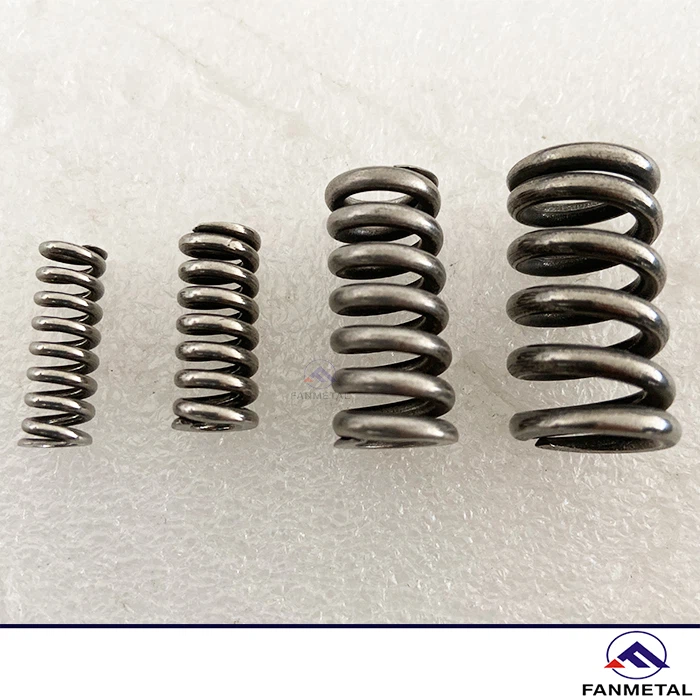
Since springs play a vital role in many products, high strength is the most important performance requirement for spring materials. Replacing more traditional steel springs with titanium alloy springs has many advantages in terms of weight, size and performance. Titanium not only High strength, light weight, excellent corrosion resistance, good bio-affinity, and good elasticity after adding alloy elements, it is the best material for making springs.
Steel alloys are the most common spring manufacturing materials. However, when it comes to lightweighting, titanium springs are typically 70% lighter than their steel counterparts. Titanium is less dense and has a lower shear modulus than steel, about twice as low, making titanium twice as "elastic" as steel. Titanium springs also have a higher spring deflection than steel springs, which means that titanium springs require fewer moving coils than an equivalent steel spring. By using titanium, engineers can reduce the free height of the spring, saving space and weight without sacrificing performance.
Traditionally, titanium is expensive, and its cost is six to seven times that of steel. However, based on the current production technology, titanium springs have greater economic benefits, longer service life, and lower maintenance costs. They are very suitable for aerospace applications. Aerospace, automotive, medical, chemical and construction industries.