

Titanium Rods and Their Applications
Titanium is known for its high strength-to-weight ratio, corrosion resistance, good toughness, low elastic modulus, biocompatibility, and non-magnetic properties. These characteristics make titanium suitable for medical, aerospace, chemical, and other industrial applications.
Titanium rods are produced from titanium sponge through processes such as forging, rolling, vacuum annealing, and polishing.
Medical titanium rods are used for medical equipment, implant components, shafts, and other medical applications. In aerospace, titanium alloys are used for load-bearing components such as adapter rings, landing gear, engine blades, compressor discs, hubs, and joints.

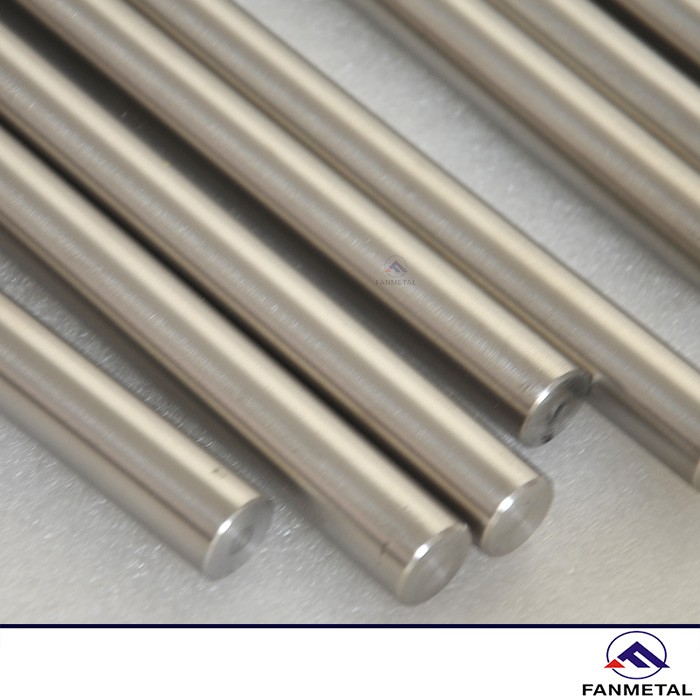
Forging Process of Titanium Rods
Titanium rod forgings are mainly made from commercially pure titanium or titanium alloys with different compositions. The starting materials can include titanium bars, titanium ingots, metal powder, or molten metal.
For small and medium-sized forgings, round or square bars are commonly used as blanks. A bar with a uniform grain structure, good mechanical properties, accurate dimensions, and a good surface condition is suitable for producing consistent titanium forgings.
By controlling the heating temperature and deformation conditions, titanium rods can be forged to the required shape and properties without excessive deformation.
Forging Ratio and Processing Conditions
The forging ratio is the ratio of the metal cross-sectional area before deformation to the cross-sectional area after deformation. Selecting an appropriate forging ratio is important for controlling the quality and properties of titanium products.
Heating temperature, holding time, initial and final forging temperatures, deformation amount, and deformation speed can all affect the final quality of titanium forgings. Proper control of these parameters can help achieve consistent material properties and reduce unnecessary processing costs.
Rolling and Surface Finishing of Titanium Rods
Rolling is used to reduce the cross-sectional dimensions of titanium rods and achieve the required size and surface condition. After rolling, titanium rods may undergo processes such as annealing, grinding, or polishing depending on the required specifications and surface finish.
For small parts that are difficult to polish individually, barrel finishing can also be used. In this process, the parts and abrasive media rotate together in a drum, which helps remove surface irregularities and improve the appearance of the parts.
Proper selection of rolling and finishing parameters can improve production efficiency and help maintain consistent product quality.